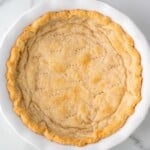
How to Blind Bake a Pie Crust
Learn how to blind bake a pie crust with this simple tutorial and step by step photos. Perfect for any pie recipe that starts with a partially baked crust.
Servings: 8 servings
Ingredients
- 1 pie crust store bought or homemade, see note
Instructions
- Roll out the pie crust and put in a deep 9-inch pie pan. I like to use a well-floured surface, and I rotate the pie crust, adding more flour underneath as needed, as I roll. To transfer to the pie crust, roll the pie crust up over the rolling pin and with it over the rolling pin, transfer it to the pie dish.
- Cut off any excess dough that is hanging off the edge of the pie plate. Then working around the edge of the dough, crimp the dough. Pierce the dough a few times with a fork. This will prevent the dough from bubbling up while baking. Alternatively, if you miss this step, you can gently cut the bubbles with a sharp knife when it comes out of the oven.
- Wrap with plastic wrap and put in the refrigerator for 30 minutes. This will help the crust hold its shape once it is in the oven.
- Preheat the oven to 425 degrees Fahrenheit.
- Take the pie crust out of the refrigerator and take off the plastic wrap. Line the pie crust with parchment paper. On top of the paper, place pie weights (loose change or dry beans also work well). Spread them so that they start to go up the edges.
- Bake the pie crust for 15 minutes.
- Remove the pie crust from the oven and if making a custard based pie, fill the crust with the filling and return to the oven for the amount of time indicated in the recipe.
- If your recipe calls for a fully baked pie crust, remove the weights, pierce the dough with a fork, and return the crust to the oven for 5 minutes to finish baking the crust. If you are worried about the edges over-browning, you can use a pie shield in this step. Remove the crust from the oven, and then it is ready to use in any recipe that calls for a fully baked crust.
Notes
While you can certainly do this with a store-bought crust, I think that it works best when it is a homemade crust. They are thicker, flakier after baking, and have a better taste. I recommend my easy pie crust recipe.