



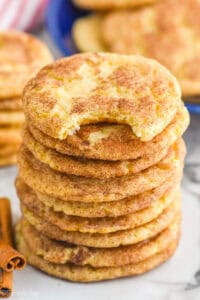
Snickerdoodles are the perfect cookie recipe. This classic cookie uses a combination of butter for perfect flavor and shortening to keep from spreading too much without any chill time. These cookies are easy to make and even easier to eat!
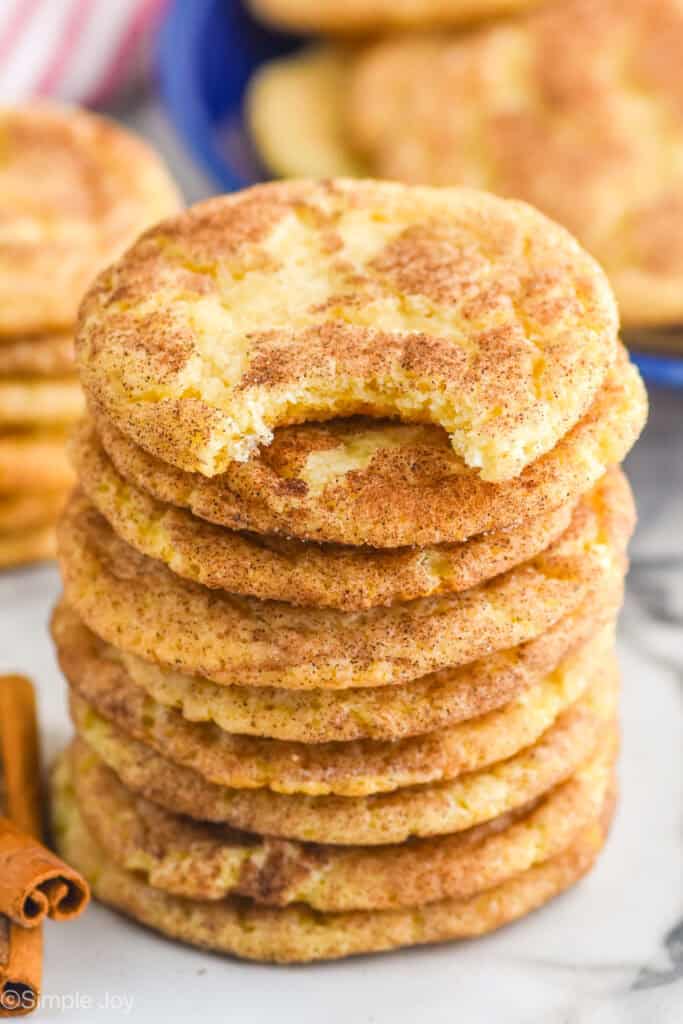
My family is completely obsessed with this recipe. This is such a simple cookie, but it provides such a unique taste. Along with that, you get a slightly crisp exterior and a buttery soft center. This really is the best snickerdoodle recipe.
A snickerdoodle is a cookie similar to a sugar cookie that is rolled in cinnamon and sugar before baking. The soft, chewy delight contains cream of tartar, which helps give the cookie its irresistible texture and tangy flavor.
Why This Recipe Works
- Cream of Tartar: In addition to giving snickerdoodles their signature tang, this is a key ingredient. The chemical reaction that happens between the cream of tartar and the baking soda is what gives the cookies their rise.
- Combination of Butter and Shortening: The butter in this recipe provides great flavor. The shortening has a higher melting point, so it keeps the cookies from spreading without chilling the dough.
- Ten Minutes Extra on the Baking Sheet: We purposefully slightly underbake the cookies in the oven, and they finish baking on the pan, which keeps the cookies soft and chewy- just how we like them!
How to Make Snickerdoodles
Here is a brief overview of how this snickerdoodle recipe comes together. For the full recipe, including all ingredients and measurements, see the recipe card at the bottom of the post.
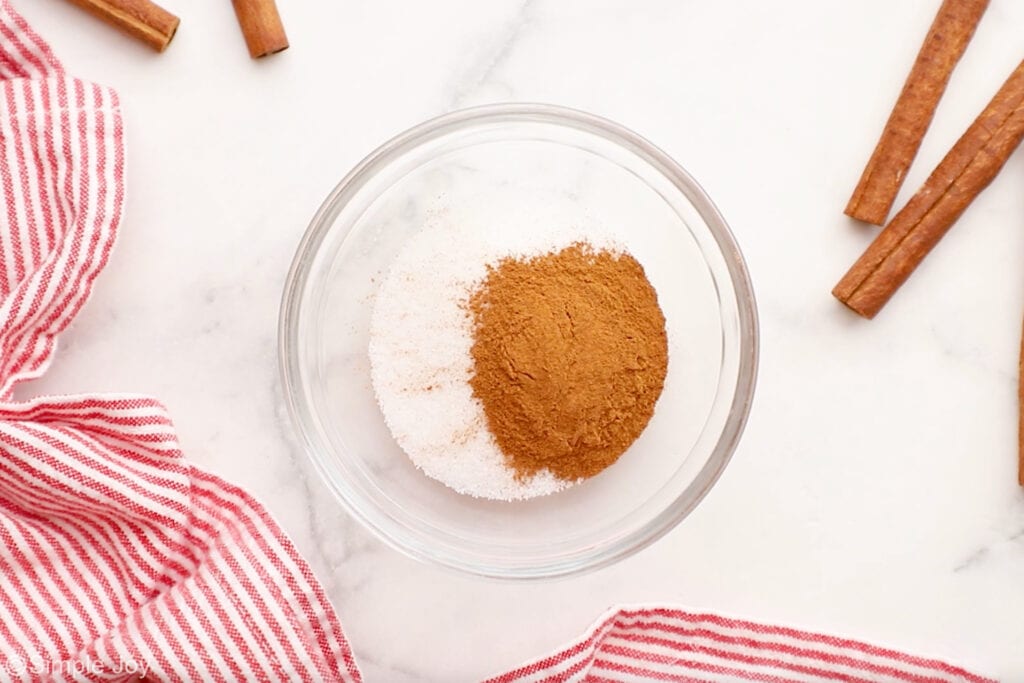
Make the Cinnamon Sugar Mix
Combine some of the sugar along with the cinnamon in a small bowl and set aside.
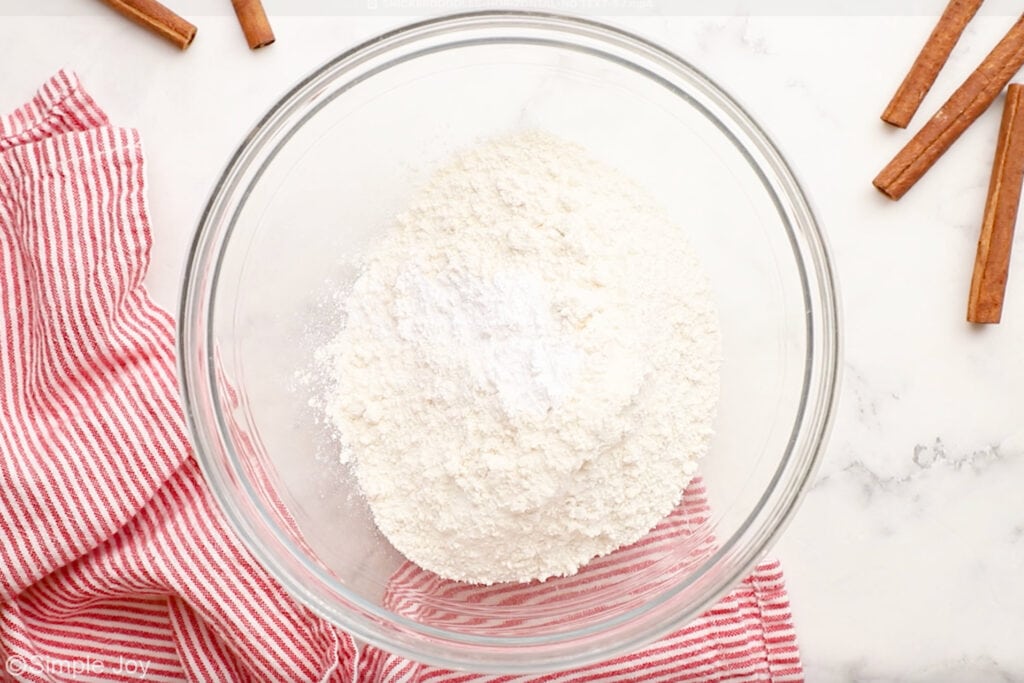
Combine Dry Ingredients
Whisk together the flour, cream of tartar, baking soda, and salt in a medium bowl. Set aside.
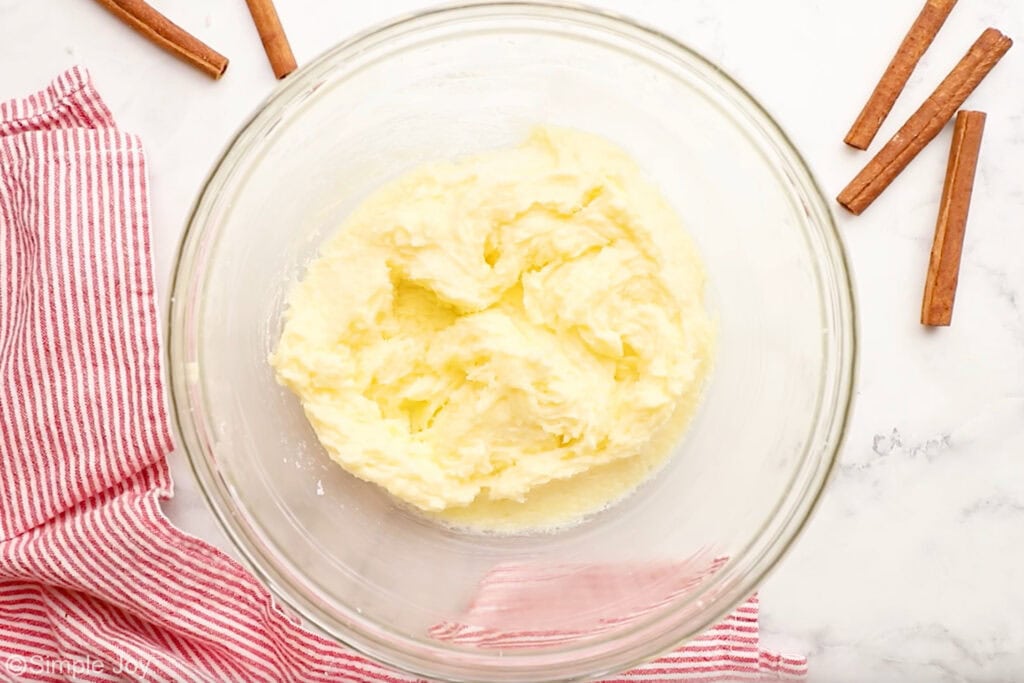
Mix the Wet Ingredients
Cream together your sugar, shortening, and room-temperature butter using a stand mixer or hand mixer until they are well mixed and fluffy. Add the eggs one at a time, scraping down the sides of the bowl as needed.
Combine the Wet and Dry Ingredients
Add the flour mixture to the wet ingredients all at once, starting at a low speed and then increasing until it is all mixed.
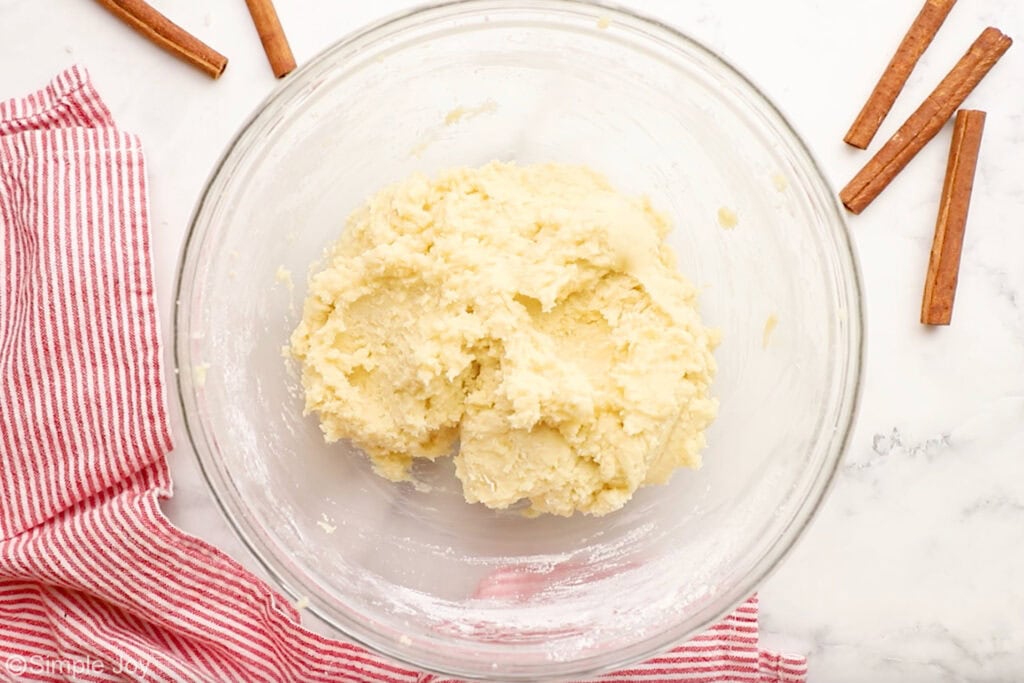
Form the Dough into Balls
See my note below on your option to chill the dough. Use a cookie scoop to scoop the dough, roll the dough into balls, and then roll them in the sugar and cinnamon mixture. Place on a parchment-lined cookie tray, leaving about 2 1/2 inches between them.
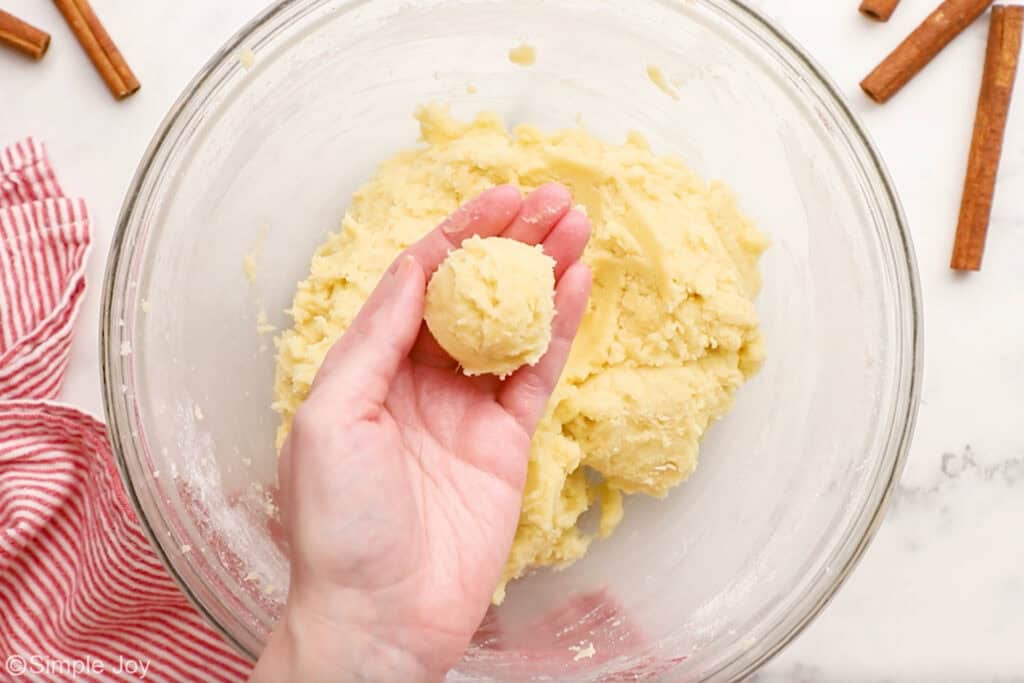
Bake the Cookies
Rotate the tray halfway through. Remove the cookies when the edges just begin to turn golden brown. Let the cookies cool on the baking sheet for ten minutes before transferring them to a wire rack.
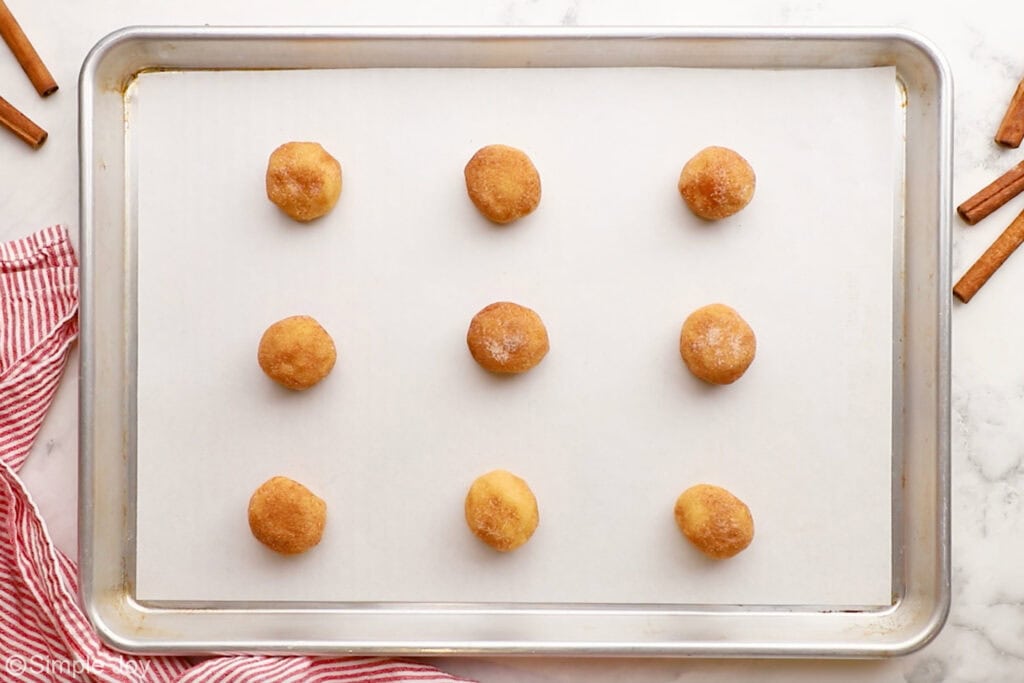
Tips and Tricks for Snickerdoodle Success
- Scoop and level your flour: A key part of any baking recipe that calls for flour is to measure the flour correctly. If you don’t have a kitchen scale, you can scoop your flour with a spoon into a dry measuring cup, and then level it off. You can see a step-by-step tutorial of that here: How to Measure Flour.
- Chill the dough: To make your cookies slightly thicker and chewier, let the dough chill, covered, in the refrigerator for one hour. This step is completely optional! My family loves them better this way, but also devours them when I don’t chill the dough.
- Room temperature butter: The butter should be soft enough that you can dent it with your finger, but not push all the way through. To soften your butter quickly for this easy snickerdoodle recipe, cut it into one-inch pieces and set it on the counter for about 30 minutes. Do not put it in the microwave.
- Use a cookie scoop: For your cookies to cook evenly, they must be the same size. The easiest and best way to do this is to use a cookie scoop!
- Use good baking sheets: Baking sheets can really change the outcome of a baking recipe. I have my favorite linked here. They work perfectly every time.
- Bake one tray at a time: Only bake one tray of cookies at a time, putting the baking sheet on the middle rack of your oven.
Making Ahead
To make your snickerdoodles ahead of time, you have a few options. Baked cookies will last in an airtight container for up to five days.
You can prepare the dough and store it, covered, in the refrigerator for up to two days. When you are ready to bake the cookies, remove the dough and continue with step #8 on the recipe card. To make them even further in advance, see my tips for freezing snickerdoodle cookies below.
Freezing Snickerdoodles
Freezing as Dough
Snickerdoodles can be frozen as cookie dough balls or as baked cookies. To freeze the dough, follow the recipe up to the point of using your cookie scoop to form the dough into balls. Rather than rolling the dough balls in the cinnamon sugar mix, transfer them to a parchment-lined baking sheet. Place the baking sheet in the freezer for four hours to flash freeze the dough, then transfer the dough balls to a freezer-safe container and freeze for up to three months.
When you are ready to bake the cookies, allow the dough balls to thaw on the counter. Then roll the dough balls in the cinnamon sugar mixture and bake according to the recipe card.
Freezing as Baked Cookies
To freeze your baked cookies, bake them according to the recipe. When they are completely cool, transfer the cookies to a freezer-safe bag or container and store in the freezer for up to three months. Allow to thaw on the counter before eating.
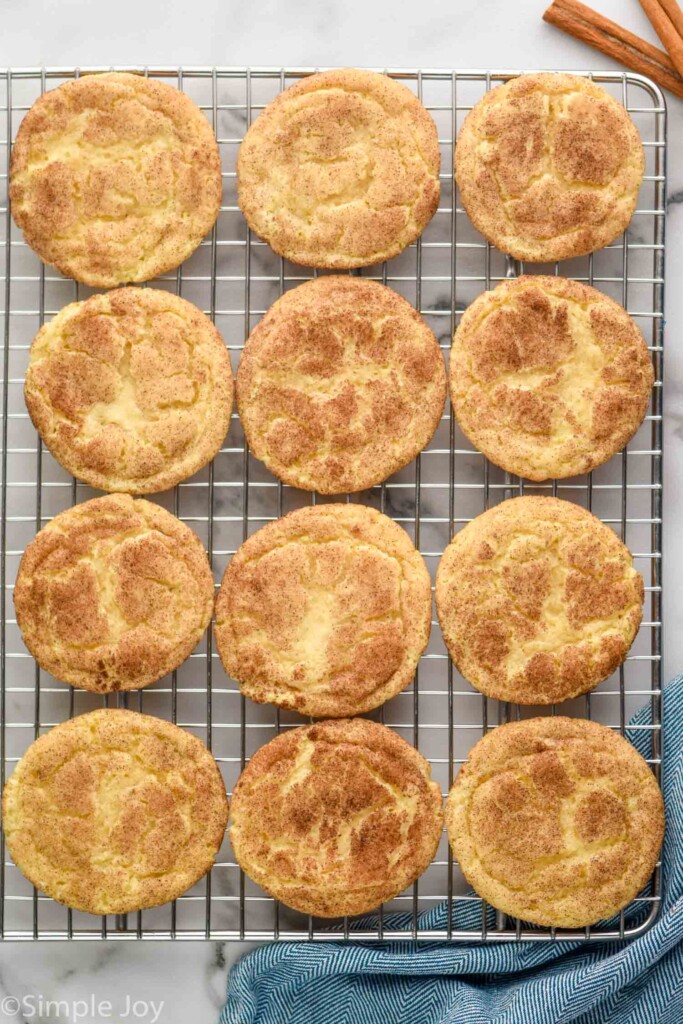
If you make this Classic Snickerdoodle Cookie recipe or any of my other recipes, please leave a comment and let me know what you think. I love hearing from you!
Recipe Video
Snickerdoodles
Ingredients
Coating
- 1/4 cup granulated sugar (49.5 grams)
- 1/2 tablespoon cinnamon
Cookie Dough
- 2 1/2 cups all-purpose flour (300 grams)
- 2 teaspoons cream of tartar
- 1 teaspoon baking soda
- 1/2 teaspoon table salt
- 8 tablespoons unsalted butter room temperature (113 grams)
- 1/2 cup vegetable shortening (92 grams)
- 1 1/2 cups granulated sugar (297 grams)
- 2 eggs
Instructions
- Preheat your oven to 375 degrees Fahrenheit. Line a baking sheet with parchment paper and set aside.
- In a small bowl whisk together sugar and cinnamon. Set aside.1/4 cup granulated sugar, 1/2 tablespoon cinnamon
- In a medium bowl whisk together the all-purpose flour, cream of tartar, baking soda, and salt. Set aside.2 1/2 cups all-purpose flour, 2 teaspoons cream of tartar, 1 teaspoon baking soda, 1/2 teaspoon table salt
- In a large mixing bowl with a hand mixer or the bowl of a stand mixer with the paddle attachment, beat the butter, shortening, and sugar together until the mixture is light and fluffy, about three to six minutes.8 tablespoons unsalted butter, 1/2 cup vegetable shortening, 1 1/2 cups granulated sugar
- With the mixer on low, add in the eggs, one at a time, scraping down the sides as needed.2 eggs
- Add the flour mixture all at once. Set the mixer to very low and beat until it is just well enough combined that it won't fly everywhere. Turn up the mixer to high and beat until just combined, about 15 seconds. Give the batter a final stir with a spatula to make sure it is combined.
- Optional: Let the cookies chill, covered, in the refrigerator for one hour. These will make for just slightly thicker and chewier cookies. My family loves them this way but also devours them when I don't chill the dough.
- Using a 1 1/2 tablespoon cookie scoop, scoop the cookies, roll them into balls, and then roll them in the sugar and cinnamon mixture. Place on a parchment-lined cookie tray and bake (one tray at a time in the middle rack of the oven) 2 1/2 inches apart. Bake for 10 to 12 minutes rotating the tray halfway through. Remove the cookies when the edges just begin to turn golden brown.
- Let the cookies cool on the baking sheet for ten minutes before transferring to a wire rack.












KT says
I followed directions perfectly and cookies look the same as when they went in the oven. Dough not settling. I did not chill dough as I wanted thin cookies. What a waste of ingredients.
I’m having a hard time understanding what could have possibly gone wrong here. There’s nothing that I can think of that would leave them in ball shape after baking.